authentic content disclosure
In an age of artificially generated content, please know that what you find here, and in other post on this site, are purely human generated: these are my words, thoughts and real life photos.
It’s hard for me to convey to you in mere words the deep satisfaction I get from rendering a pot of rich, golden, bone broth. I sleep better at night knowing it’s in the fridge.
When bone-in meat cooks, much of the flavor and nutrition of the marrow is cooked into the meat, especially when it’s allowed to cook slowly. But there is yet gold untold in those bones!
Nourishing
The properties in the bones, skin, cartilage and connective tissues are the same ones found in a collagen supplement, and they’re the same building blocks our own tissues require to maintain themselves. They are vital for our skin, hair, nails and the lining of the digestive tract. It’s also a source of protein and is full of lysine, which helps fight viruses, validating the inherent urge to feed chicken soup to sick children.
Flavorful
But it isn’t ALL about nutritional value, this stuff is delicious! Bone broth deepens and enriches the flavor of whatever dish it’s used in. It’s the best foundation for soups and stews and the perfect enhancer of sauces and vegetables. It’s also the most secret way to nourish picky toddlers… simply use it in place of water for the rice and pasta that they will eat!
Thrifty
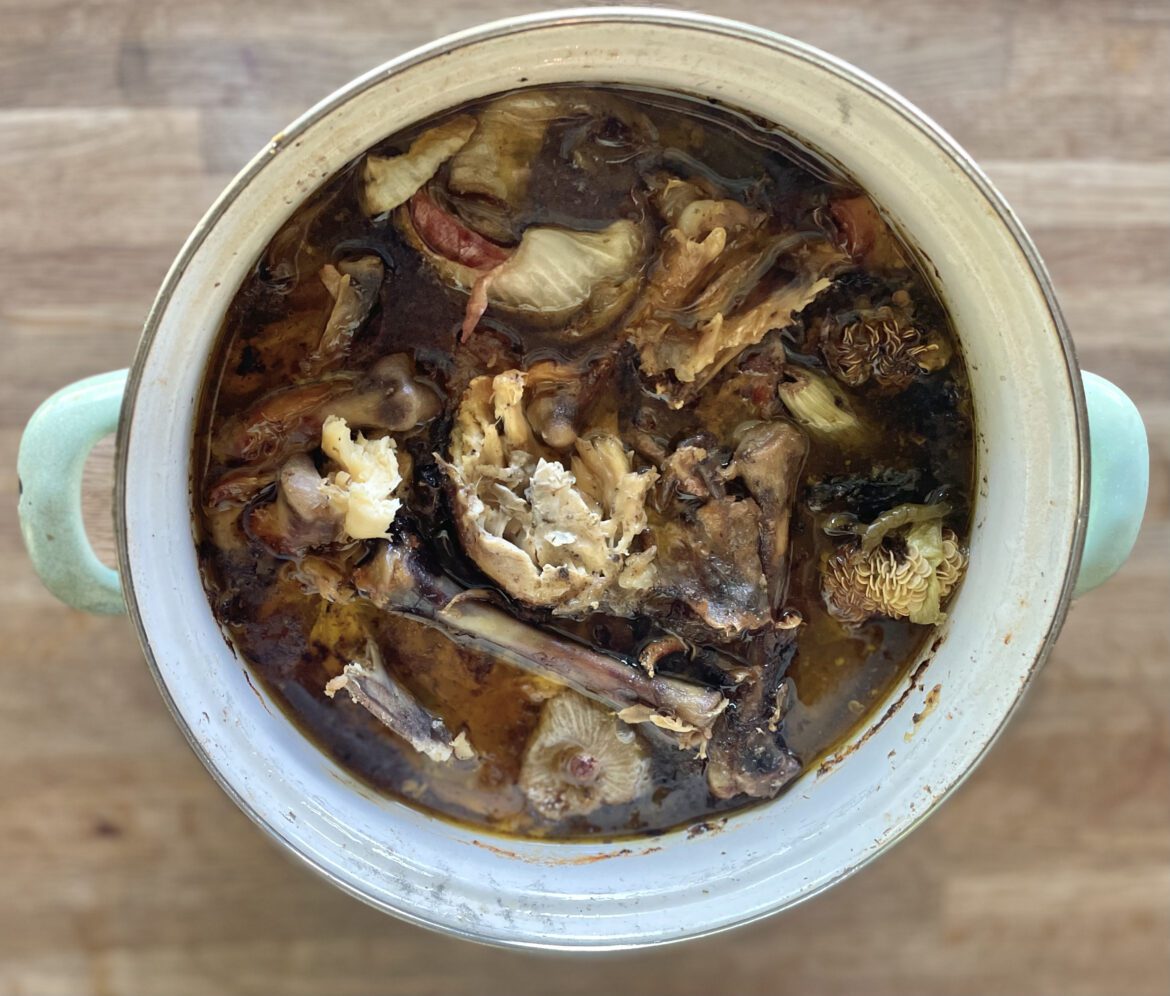
Every time we cook bone-in steaks, lamb chops, a roasted chicken (or any piece of meat with a bone), I just keep the scraps. When I have a decent collection stored up, it’s time to simmer down!
To me, one of the biggest perks of daily, consistent home cooking from scratch is that you sort of stumble into luxurious by-products.
Obviously bone broth falls in this category, but even the broth gives dividends …
There is a layer of fat that hardens on top of the broth once it cools, and as it turns out, it’s amazing. It acts as an ultra-flavorful fat medium with a high smoke point, perfect for searing and sautéing.
Ideally I’d keep all the fats separately and cook with them categorically; beef in beef fat, “tallow”, chicken in chicken fat, “schmaltz” and lamb in lamb fat, also called “tallow.” Pork fat, “lard” is great, as everyone knows, and gives that bacon wrapped/slamming screen door/Grandma’s hand cream/cast iron sink sort of flavor.
And any of these would elevate sautéed vegetables, or a pot of rice, beans… food, basically.
How amazing is that though?!
You cook an animal, a whole chicken in the oven for example, and you have a nice dinner. That night you pick the leftover meat and put it in the fridge, while the bones, tidbits, odds and ends, etc. simmer down into a lovely pot of broth overnight. By tomorrow afternoon, you’ve got the handy picked meat, a deeply concentrated jar of broth, and a bit of schmaltz. The possibility of your subsequent meal outshining the original roasted chicken is very real.
Your dog said he wants the scraps.
“Waste not, want not.” he said.
homemade bone broth
simmer down
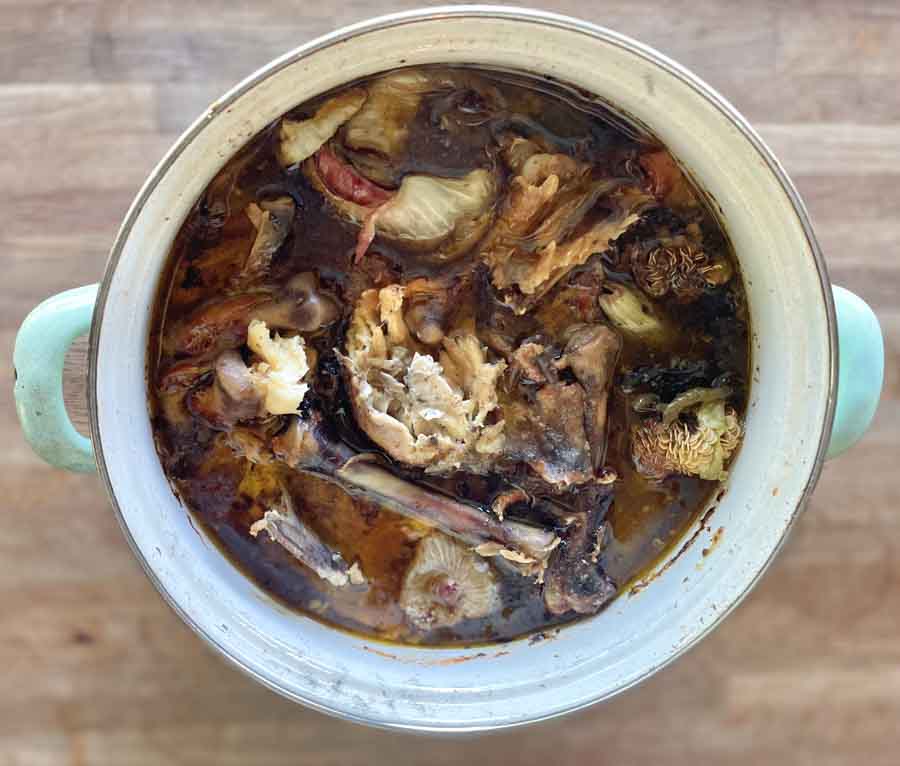
So like I said, once I have a little collection of bones and tidbits, vegetable scraps are invited too, I’ll put them in my four quart pot and fill it with water until it just covers the bones. Much of the water will evaporate so I want to make sure I budget for that since I tend to leave this on it’s own for a very long time.
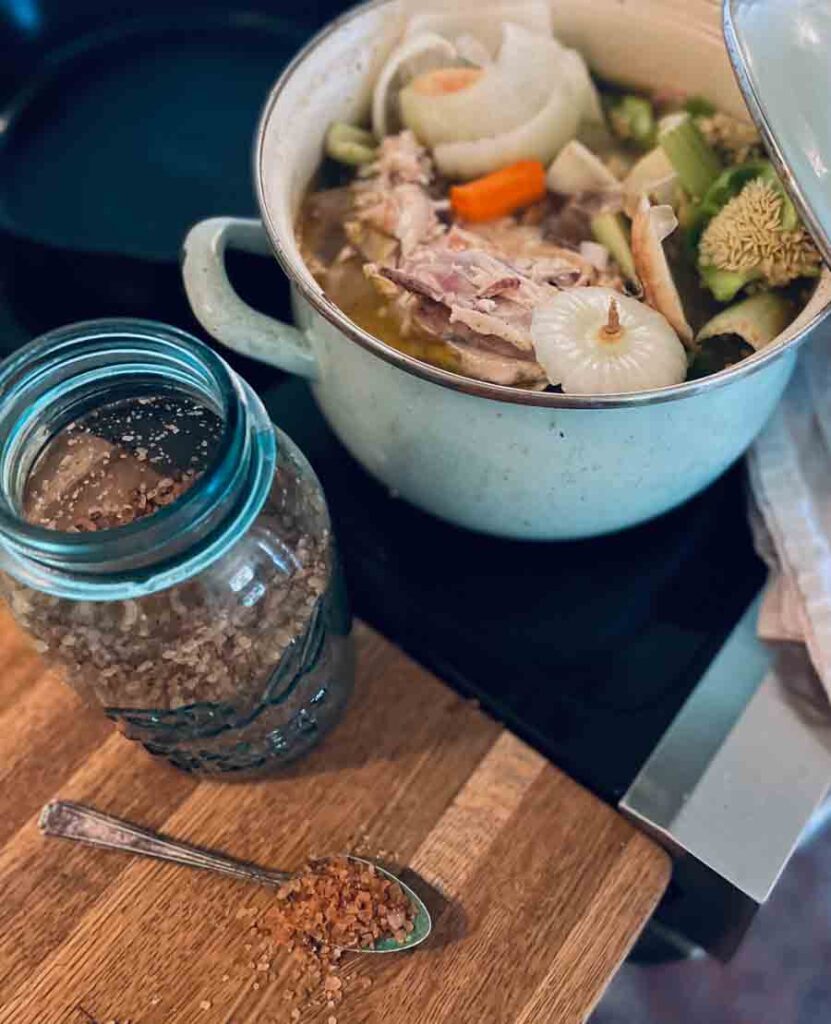
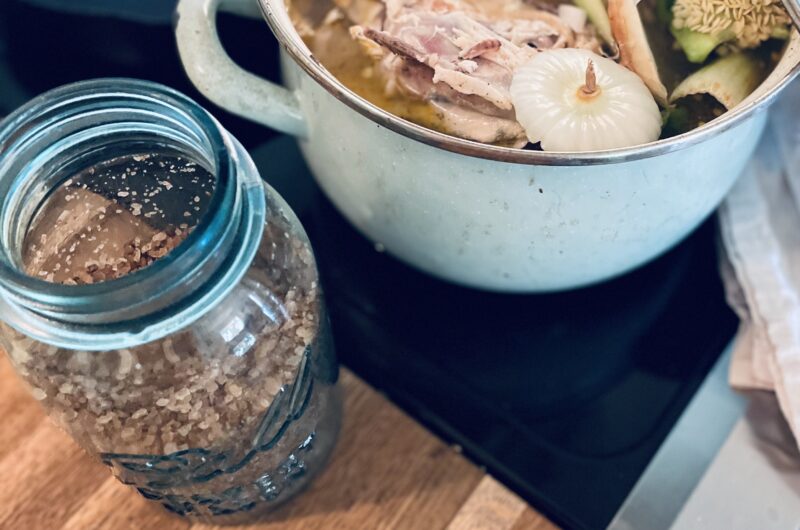
I like to use a mineral rich salt. Redmond’s salt, which I have on hand in huge bags for livestock anyway, is pretty neat. It’s an unrefined sea salt mined from an ancient seabed in Utah, where it’s pure and full of trace minerals.
The acid from a shot of apple cider vinegar helps to further extract nutrients and minerals.
I also throw in a few peppercorns and bay leaves. I like to keep the broth otherwise “neutral” so that I can use it for whatever comes up throughout the week and then season it more specifically when needed.
Typically, my collection of bones etc. have already been cooked, so really just a few hours would be sufficient for a great product, but there’s nothing wrong with letting it go overnight, either.
If I start my pot after dinner and clean up, say around 9 p.m., and then turn it off when I’m in the kitchen the next morning, around 7 a.m., that’s perfect. By the time the morning chores are done and I get around to straining it, it’s had time to cool off so I’m not struggling with boiling liquid.
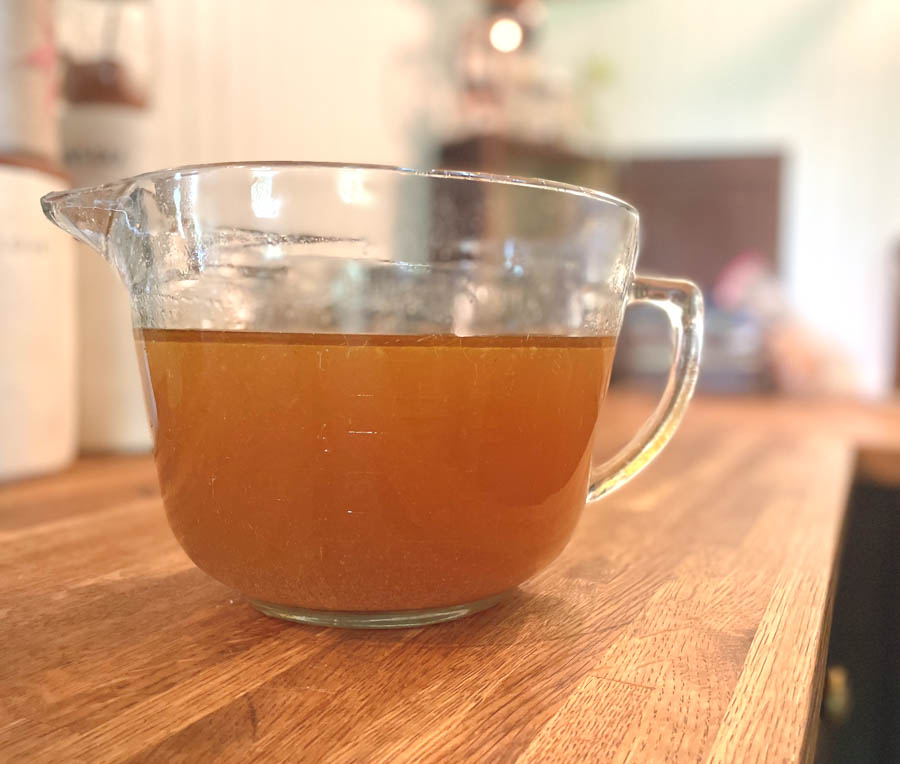
I just set a big sturdy mixing bowl with a pour spout in my sink and then set my stainless steel sieve into it. Now carefully pour all of the broth contents through the sieve and into the bowl. Strain them, dump the hound treats back in the pot and the bowl is ready! I then pour the clean, clear broth into mason jars for storage in my fridge until needed.
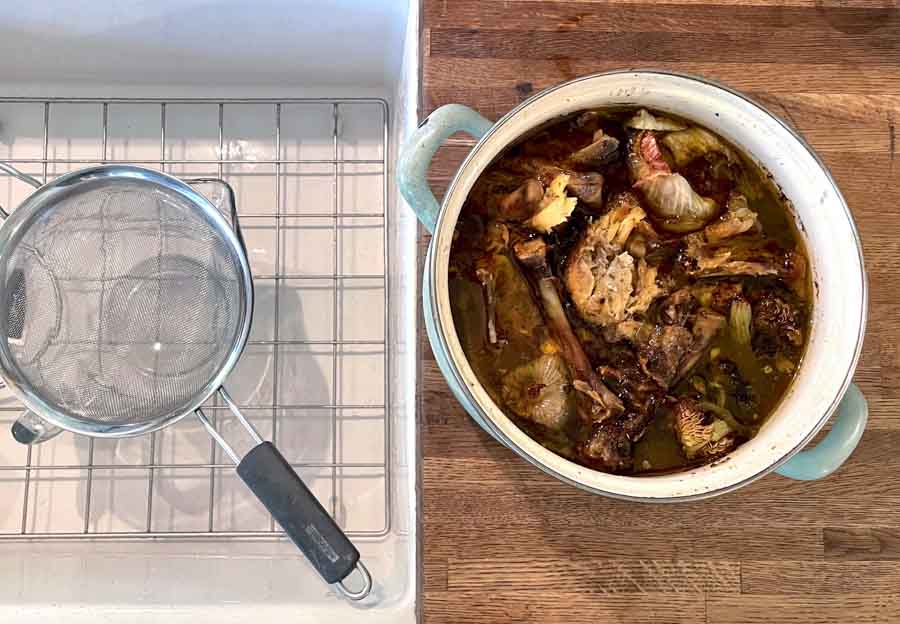
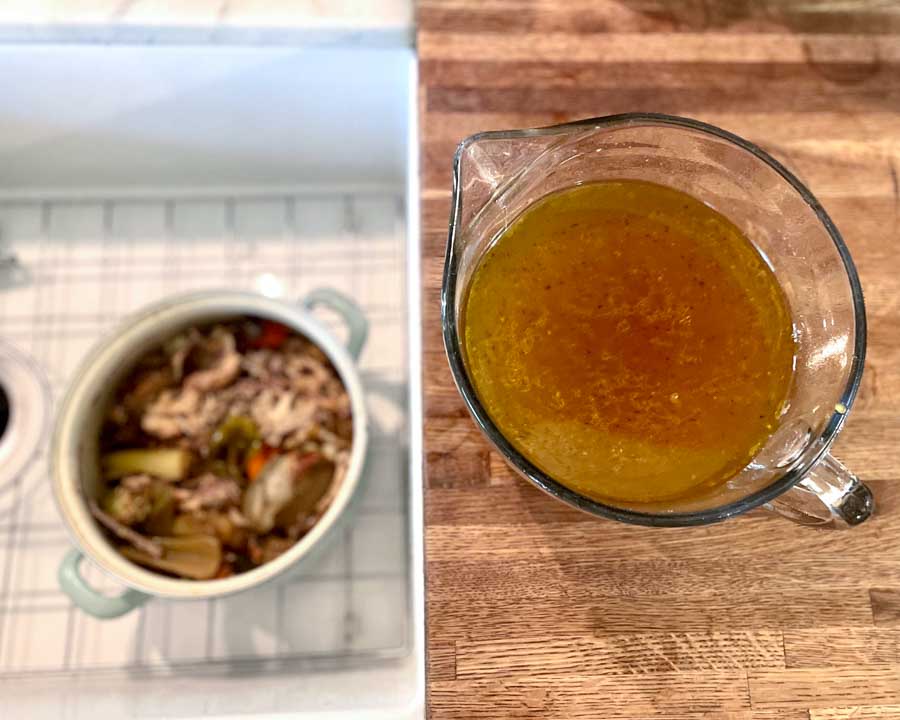
Isn’t it beautiful?!
Keeping the broth in mason jars has one added benefit, by the way. Say you need three cups of broth for a pot of rice; just note on the side of the jar how many cups you have. Simply pour into your pot until you know you’re less three cups. No need to dirty a measuring cup, no need to struggle with needing three hands when we’ve only been given two… just note and dump.
This will keep just fine up to a week or it can be frozen for future use (though I wouldn’t risk freezing it in the glass jar. Freezer ziplock bags or large silicon cubes would be ideal).
happy cooking
Bone Broth
Difficulty: EasyLearn how making homemade bone broth yields more flavor, more nourishment and more value from the foods you already have.
Ingredients
2-6 cups of leftover bones, skin, cartilage, etc.
(optional) vegetable scraps
1-2 Tbsp salt (I use Redmond’s or a Himalayan)
1-3 Tbsp Vinegar (I like an apple cider vinegar)
Water, just enough to barely cover the contents of your pot
Peppercorns or a bit of ground black pepper
A few bay leaves
Directions
- Add all ingredients to a four quart pot or put them in your crock pot.
- Simmer on low for as long as you have time, 6-12 hours is ideal (for already cooked bones, raw bones can cook much longer, 24 hours). Broth should not come to a full boil, but just barely a simmer.
- After simmering, when the broth has cooled a bit, set a large bowl (preferably one with a pour spout such as a very large measuring container) in your sink and rest an adequately sized strainer/sieve inside of it. Pour the broth through the strainer and into the bowl.
- Remove the sieve and it’s contents. Pour your clear, clean broth into containers ideal for your fridge storage, I prefer half gallon glass jars. When it has cooled to ‘warm to the touch’ place it in the refrigerator and use within the next week or freeze for future use.
Notes
- A crock pot works beautifully for this job, especially if you need to leave the house, but I have an eye on my stove that can cook low and slow, and this pot fits more easily in the dishwasher, so I usually go this route.
Leave a Reply
You must be logged in to post a comment.